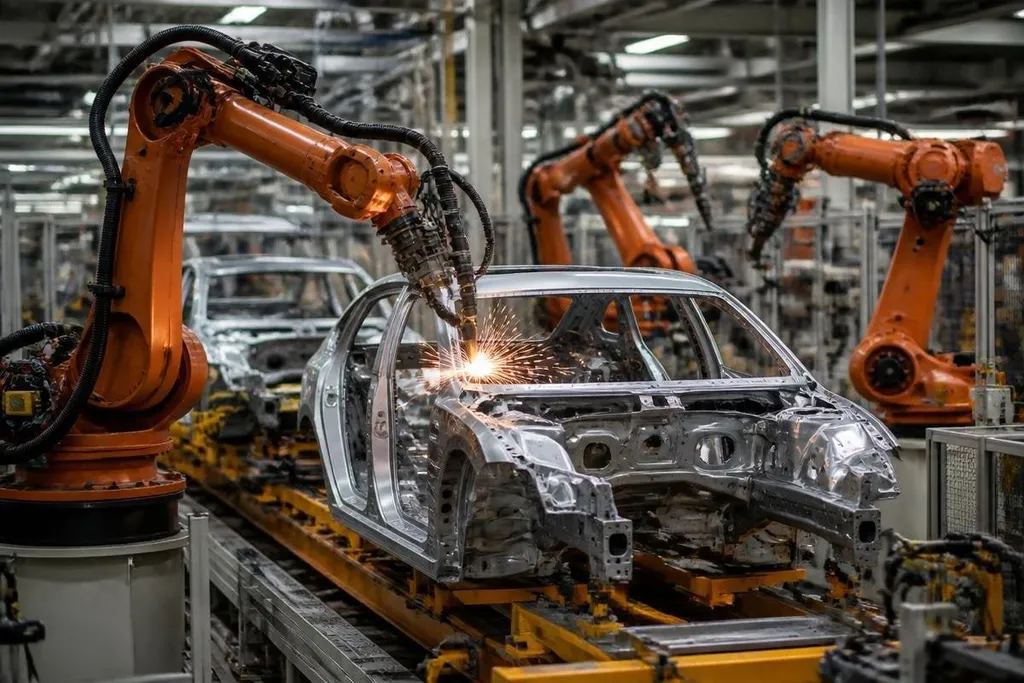
A car factory can repeat the same weld thousands of times, but each body still needs the right parts, position, and checks. Automotive robots can shorten that work when they handle repeatable tasks while people manage changes, repairs, and final decisions.
- Robotic welding keeps body panels in a fixed position
- Vision systems check gaps, parts, and surface defects
- The main limit is line design, not arm speed
Where robots save time
Most car plants use robots where the work repeats with little change.
A six-axis arm can move a panel, hold it against a fixture, and place spot welds at set points. A fixture is a frame that keeps parts in the same position while the robot works.
That repeatable position matters because a small shift can force a pause for a check. When the fixture, gripper, and welding tool work together, the robot can move from one weld to the next without waiting for a person to reset the panel.
Material handling adds another time saving. Robots can move doors, battery packs, seats, or body panels between stations. Their software can send each part to the correct cell, while sensors check that the part arrived before the next task starts.
The gain comes from fewer pauses between tasks. A robot arm may finish its movement quickly, but the full station only gets faster when parts, tools, safety checks, and workers stay in step.
Welding, painting, and inspection
Welding is the clearest use because the path is fixed and the result can be checked. Robotic welding cells can repeat the same tool movement across many vehicles, while cameras or force sensors check the panel position before work begins.
Painting uses a different setup. A robot carries a spray gun through a programmed path, keeping the distance and angle close to the same for each body. The paint still needs the right temperature and drying time, so a faster arm cannot remove those limits.
Inspection robots look for gaps, dents, missing fasteners, or paint problems. Three-dimensional vision uses depth data to compare a finished area with its planned shape. That can send a body back for repair before it reaches a later station.
Inspection results matter most when they show which part slowed the line. Robot 24 can connect that result with the named plant, machine, task, and date, so you can judge the cause before looking at the parts that hold up production.
The parts that slow the line
A robot does not fix a poorly planned factory. If parts arrive late, a gripper cannot reach them, or a safety scanner stops the cell, the arm waits with the rest of the line.
Car makers also build several models on one line. That change means a robot may need a new tool path, a different gripper, or fresh settings for each body style. Engineers must test those changes before production can run at the planned rate.
Battery packs add another concern. They are heavy, costly parts that need careful handling and checks for damage. The robot can lift and position a pack, but people still need to set the rules for safe movement, service, and fault handling.
I’d judge a factory robot by the time it saves across the whole station, not by the arm’s top speed.
What to check before adding robots
A plant manager can use this list before choosing a robot cell:
- Map every pause around the task, including part delivery and safety stops.
- Check the payload, reach, repeatability, and tool connection against the real part.
- Test each vehicle version that will run on the line.
- Measure repair time when a sensor, gripper, or motor fails.
- Set a clear handoff between robot work and human inspection.
These checks connect the robot to the factory around it. They also show where a smaller change, such as a better fixture or part feed, may save more time than a new arm.
What happens next
The next gains will come from linking robots with vision, production software, and better fixtures. That work can reduce waiting between stations, but the proof will be visible in one number: how many finished cars leave the line during a normal shift without extra stops.