
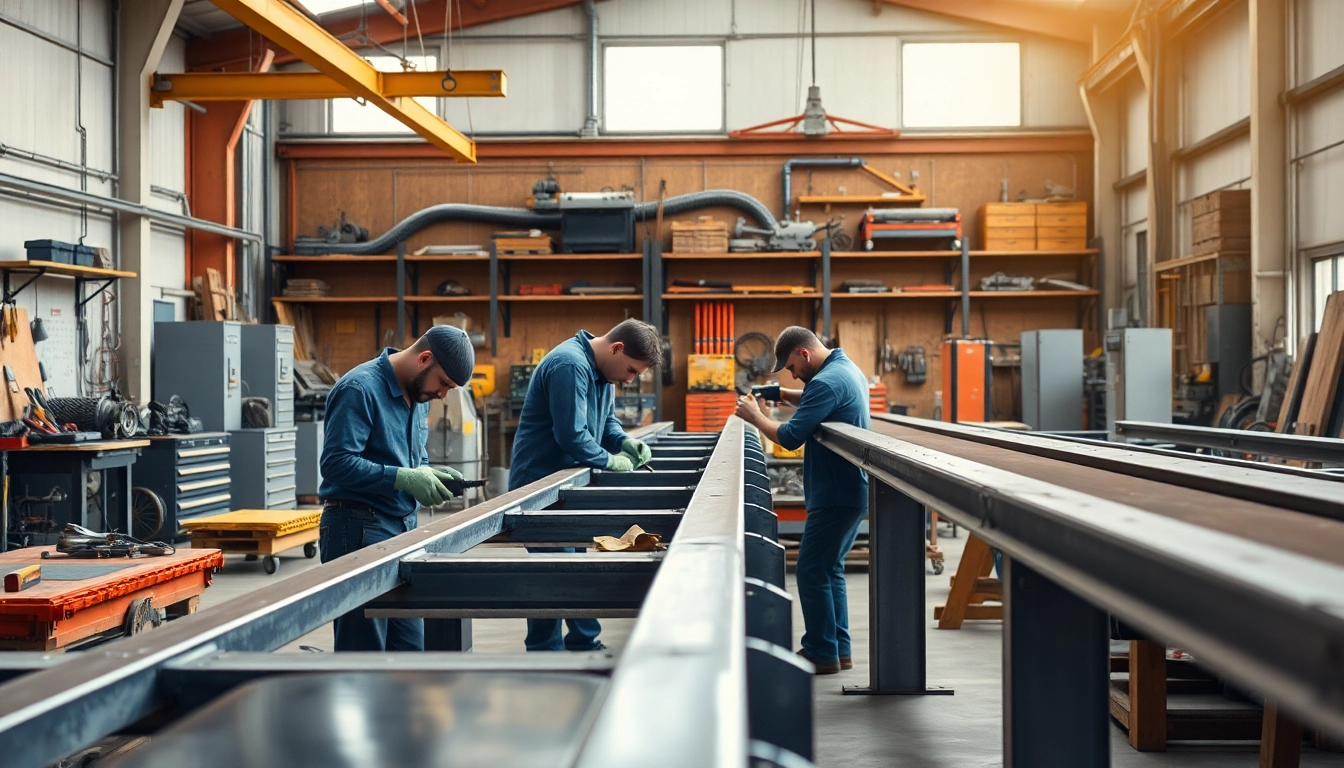
Mastering Custom Steel Fabrication: Techniques, Trends, and Best Practices
Understanding Custom Steel Fabrication
What is Custom Steel Fabrication?
Custom steel fabrication is a specialized process that involves the design, creation, and alteration of steel structures and components to meet specific requirements. This process typically involves various techniques such as cutting, welding, and finishing to produce tailored products that can meet diverse applications, from industrial machinery to architectural structures. Custom steel fabrication supports industries by providing high-strength, durable, and adaptable designs that conventional mass-produced options may not offer. Moreover, the ability to manipulate steel means that fabricators can respond to changing market needs, technological advancements, and environmental considerations with greater efficiency and precision.
Key Benefits of Custom Steel Fabrication
The advantages of custom steel fabrication are numerous and significant:
- Tailored Solutions: Custom fabrication allows businesses to develop specific solutions that meet precise demands, thereby maximizing operational efficiency.
- Quality Control: Custom fabrication maintains high standards of quality due to hands-on involvement at every step of the process, ensuring products are built to last.
- Design Flexibility: With custom fabrication, designers can explore innovative and complex designs that standard fabrication cannot accommodate.
- Cost Efficiency: Although the initial costs may be higher, the long-term savings from durability, reliability, and reduced maintenance can justify the investment.
- Time Efficiency: Fast turnaround times can be achieved due to streamlined processes and effective project management, enhancing supply chain efficiency.
Industry Applications of Custom Steel Fabrication
Custom steel fabrication finds applications across numerous industries, adapting to specific needs in:
- Construction: Custom steel components, such as beams and columns, are critical for building structures that meet regulatory standards and design goals.
- Manufacturing: In the manufacturing sector, equipment frameworks, specialized tools, and machinery components are designed and fabricated for optimized performance.
- Aerospace: Aerospace industries utilize custom fabrication to create lightweight and robust components that are crucial for safety and performance.
- Energy: Custom steel fabrications are important for renewable energy structures, including wind turbines and solar frameworks, ensuring they withstand environmental challenges.
- Automotive: The automotive sector frequently relies on custom steel fabrication for parts that require precise tolerances and durability.
Essential Techniques in Custom Steel Fabrication
Cutting Techniques for Custom Steel Fabrication
Cutting is a foundational process in steel fabrication. Various methods are employed depending on the type of cut, material thickness, and the desired outcome:
- Laser Cutting: This high-precision technique employs focused laser beams to efficiently cut through varying thicknesses of steel, providing clean edges and intricate designs.
- Plasma Cutting: Utilizing high-velocity streams of ionized gas, plasma cutting is ideal for thicker metals, offering rapid results with adequate accuracy.
- Water Jet Cutting: This environmentally friendly method uses a high-pressure water jet, often mixed with abrasives, to cut materials without introducing heat, which can deform the metal.
- Shearing: Mechanical shears or blades are utilized to cut sheets and strips of metal to size, ideal for producing uniform sections. Welding Methods in Custom Steel Fabrication
- MIG Welding (Gas Metal Arc Welding): This versatile method is commonly used in the fabrication of thin and thick metals due to its speed and adaptability.
- TIG Welding (Gas Tungsten Arc Welding): Known for its high-quality finish, TIG welding is ideal for intricate and delicate components where precision is crucial.
- Stick Welding (Shielded Metal Arc Welding): This traditional method is effective for outdoor work and thick metals but requires skilled operators for best results.
- Submerged Arc Welding: Often used for heavy-duty applications, this process provides deep weld penetration and is efficient for thick materials.
- Powder Coating: A popular method that applies a dry powder to create a hard, protective finish that is often more durable than conventional paint.
- Galvanization: This process involves coating steel with zinc to prevent rust and corrosion, significantly extending the material’s lifespan.
- Polishing: Used primarily for aesthetic purposes, polishing metal can enhance reflectivity and surface smoothness.
- Painting: Protective paint coatings can minimize corrosion and provide an attractive finish that fits the desired design specifications.
- On-Time Delivery: Evaluating the percentage of projects completed on schedule to assess efficiency and customer satisfaction.
- Cost per Unit: Monitoring production costs to ensure profitability and identify areas for cost containment without sacrificing quality.
- Defect Rates: Measuring the number of defects or returned products to ensure adherence to quality standards.
- Employee Efficiency: Tracking productivity levels to optimize workforce allocation and training programs.
- Customer Feedback: Regular surveys or interviews to gather insights on customer perceptions and experiences.
- Net Promoter Score (NPS): A simple measure of customer loyalty through recommendations.
- Repeat Business: Analyzing the percentage of customers returning for additional services or products as an indicator of satisfaction.
Welding connects steel components, providing strength and integrity to the overall structure. Various welding techniques include:
Finishing Touches in Custom Steel Fabrication
The finishing processes in custom steel fabrication enhance both appearance and durability. Finishing techniques include:
Common Challenges in Custom Steel Fabrication
Material Sourcing Issues
One of the significant challenges in custom steel fabrication is sourcing the right materials. Steel availability can fluctuate based on market conditions, trade policies, and supply chain disruptions, which can delay projects and increase costs. Fabricators need to establish robust relationships with suppliers and explore local alternatives to mitigate these issues. Additionally, they should consider stockpiling essential materials to buffer against shortages.
Design Complexity in Custom Steel Fabrication
As design innovations become increasingly complex, the challenges of accurately translating those designs into fabricable components escalate. Complex designs may require advanced software for modeling and simulations that many fabricators might not be equipped to handle. Ensuring that design teams understand the manufacturing constraints and capabilities can lead to more feasible projects. Implementing design reviews and prototyping can also help catch potential issues before full-scale production begins.
Quality Control Measures
Maintaining quality throughout the fabrication process is essential but can be challenging. Variability in materials, human error, and mechanical failures can lead to defects that may only become visible later in the process. To combat this, fabricators should establish strict quality control measures, including regular inspections and testing at various stages of fabrication. Implementing ISO certification procedures can also provide a structured framework for maintaining quality standards.
Emerging Trends in Custom Steel Fabrication
Automation and Technology Integration
With advancements in technology, automation is becoming a prominent trend in custom steel fabrication. Automated machinery, such as robotic arms and computer-controlled cutting tools, can significantly increase production efficiency while ensuring precise tolerances. Integrating digital technologies, such as Industry 4.0 principles and Internet of Things (IoT) devices, allows for real-time monitoring of processes, leading to improved operational transparency and responsiveness to changing demands.
Sustainable Practices in Custom Steel Fabrication
As industries shift towards sustainability, custom steel fabrication is embracing eco-friendly practices. This includes using recycled materials, implementing energy-efficient manufacturing processes, and minimizing waste. By focusing on sustainable practices, fabricators not only comply with increasing regulations and customer expectations but also contribute to reducing their environmental impact.
Customization for Unique Projects
The demand for unique and customized solutions continues to rise as industries seek to differentiate themselves in competitive markets. Fabricators are adapting by offering modular designs, personalized configurations, and rapid prototyping to accommodate unique customer needs. Embracing modular and flexible manufacturing processes enables fabricators to respond quickly to specific project requirements without compromising on efficiency or quality.
Measuring Success in Custom Steel Fabrication
Key Performance Indicators
To measure success in custom steel fabrication, it’s essential to establish key performance indicators (KPIs) that align with organizational goals. Common KPIs include:
Customer Satisfaction Metrics
Evaluating customer satisfaction is vital for ongoing success. Common metrics include:
Case Studies and Success Stories
Documenting case studies and success stories illustrates the practical application of custom steel fabrication. These should highlight specific projects, detailing the challenges faced, the solutions implemented, and the outcomes achieved. Successful case studies not only serve as testimonials for potential clients but also provide valuable learning experiences for the business.